Drip Irrigation for Banana Cultivation: A Structured Irrigation System for 10 and 15 Kattha Farms
Date: 2026-09-01 05:09:19
Irrigation project
Share:
Project: Drip Irrigation System for Banana Cultivation
Organization: Rani Jamara Kulariya Irrigation Project
Implementation Unit: Agriculture Program Implementation Unit, Tikapur, Kailali
Fiscal Year: 2079/80 B.S.
Farm Sizes: 10 Kattha and 15 Kattha
Application: Banana Cultivation
Introduction
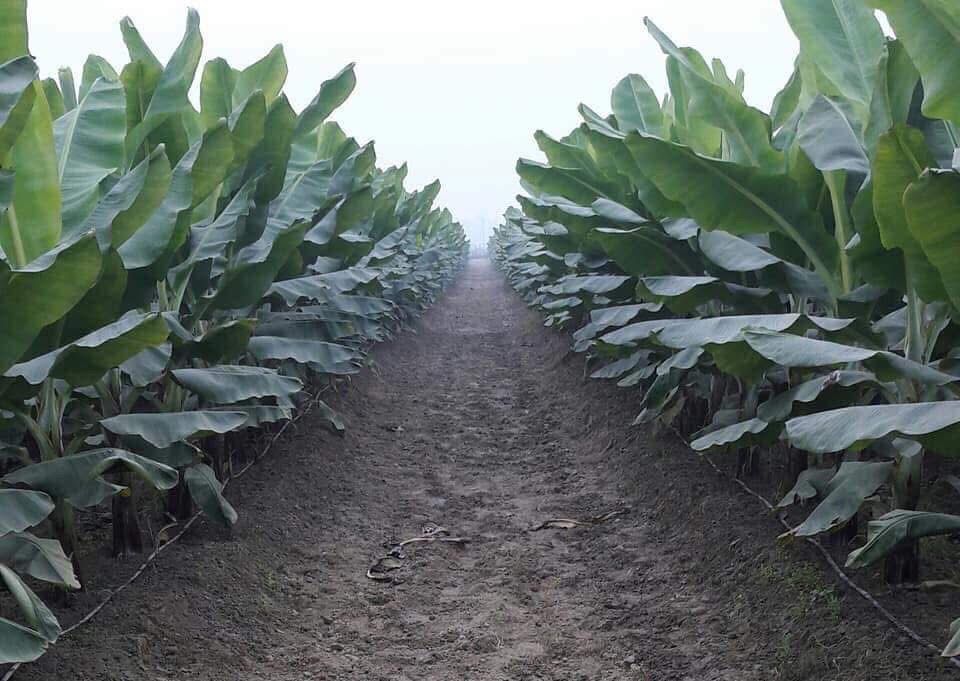
Banana is a water-demanding crop that requires regular and well-distributed irrigation throughout its growing cycle. For commercial banana cultivation, relying only on conventional irrigation methods can make it difficult to maintain consistent moisture across the field.
To support more systematic irrigation practices, a drip irrigation system was implemented for banana cultivation in 10-kattha and 15-kattha areas under the Rani Jamara Kulariya Irrigation Project, Agriculture Program Implementation Unit, Tikapur, Kailali.
The system was designed as a complete irrigation network rather than simply installing drip lines. It incorporated multiple filtration stages, 50 mm PVC main and sub-main pipelines, 16 mm drip lines, valves, fittings, and a Venturi system to create an organized water-distribution system for the banana farm.
Designing Drip Irrigation for Banana
Banana plants require regular access to water, making uniform irrigation an important part of crop management.
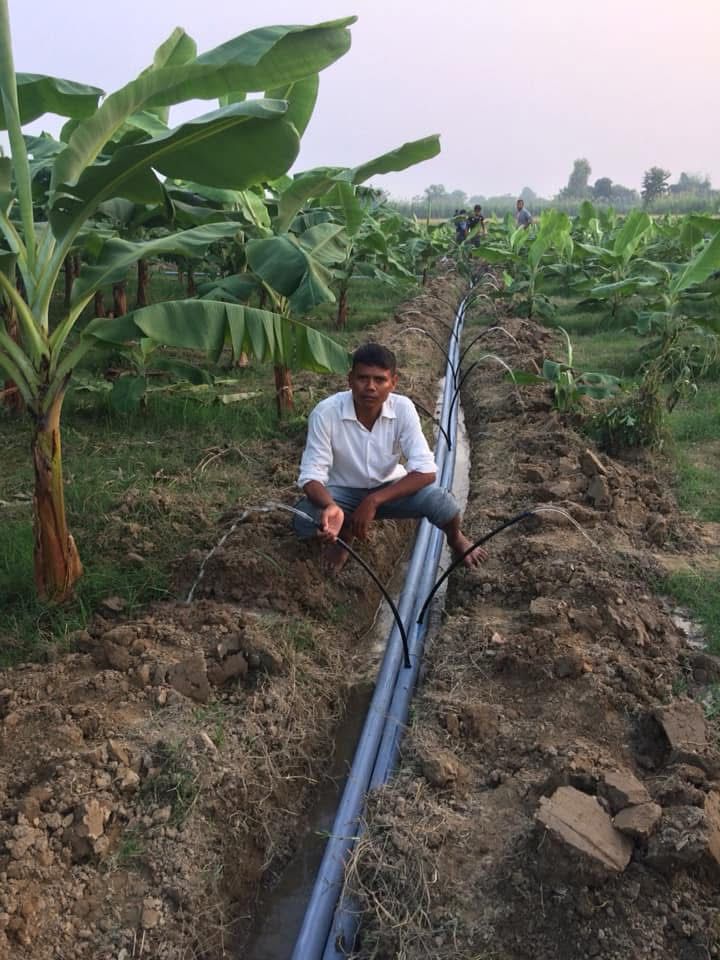
The drip system was designed to distribute water through a network of 16 mm drip lines, connected to larger 50 mm PVC main and sub-main pipelines.
This arrangement allows water to move from the source through the filtration unit and distribution network before reaching the drip lines installed within the banana cultivation area.
The system was developed for two farm sizes:
l 10 Kattha
l 15 Kattha
The difference in cultivated area is reflected in the quantity of pipeline and drip-line materials required for each installation.
Drip Irrigation System for 10 Kattha Banana Farm
For the 10-kattha banana cultivation area, the specified system includes a complete filtration and distribution arrangement.
The filtration and water-management unit consists of:
l 50 mm screen/disc filter – 1 no.
l 50 mm gravel sand filter – 1 no.
l 50 mm hydrocyclone filter – 1 no.
l 50 mm Venturi system – 1 set
The main and sub-main distribution network uses 129.30 m of 50 mm PVC pipe, supported by the required fittings and control components.
The system includes:
l T-joints
l L-joints
l PVC pipe connectors
l Vacuum relief valve/end cap
l Unions
l Water traps
l Gate valves
l PVC gum
For field-level irrigation, approximately 3,566.667 m of 16 mm drip line is specified, together with start nipples, grommets, Tech-Up components, and end caps.
Drip Irrigation System for 15 Kattha Banana Farm
The larger 15-kattha banana cultivation area uses the same basic system arrangement but requires a larger distribution network.
The filtration unit consists of:
l 50 mm screen/disc filter – 1 no.
l 50 mm gravel sand filter – 1 no.
l 50 mm hydrocyclone filter – 1 no.
l 50 mm Venturi system – 1 set
The main and sub-main network requires 158.36 m of 50 mm PVC pipe with the necessary fittings, valves, unions, water traps, and other accessories.
For the banana plants, the system includes 5,350 m of 16 mm drip line, along with the required start nipples, grommets, Tech-Up components, and end caps.
The larger drip-line quantity reflects the greater cultivated area and the need to distribute irrigation throughout the 15-kattha banana field.
Multi-Stage Filtration for Reliable Drip Irrigation
One of the most important features of the system is its multi-stage filtration arrangement.
The irrigation water passes through a combination of:
Screen/Disc Filter → Gravel Sand Filter → Hydrocyclone Filter → Drip Distribution Network
The system also incorporates a Venturi unit.
Filtration is particularly important in drip irrigation because the water is delivered through relatively small outlets. A properly planned filtration system helps reduce the risk of particles entering and obstructing the drip network.
For a commercial banana farm, maintaining a clean and functional irrigation network is an important part of achieving consistent water distribution.
Main and Sub-Main Pipeline Network
After filtration, water enters the 50 mm PVC main and sub-main pipeline network.
The pipeline system forms the backbone of the irrigation installation, carrying water from the filtration unit toward different sections of the banana field.
The network includes fittings and control components such as T-joints, L-joints, connectors, unions, gate valves, water traps, and vacuum relief components.
This organized distribution network allows the larger farm area to be divided and managed through an appropriate irrigation layout.
16 mm Drip Lines for Banana Plants
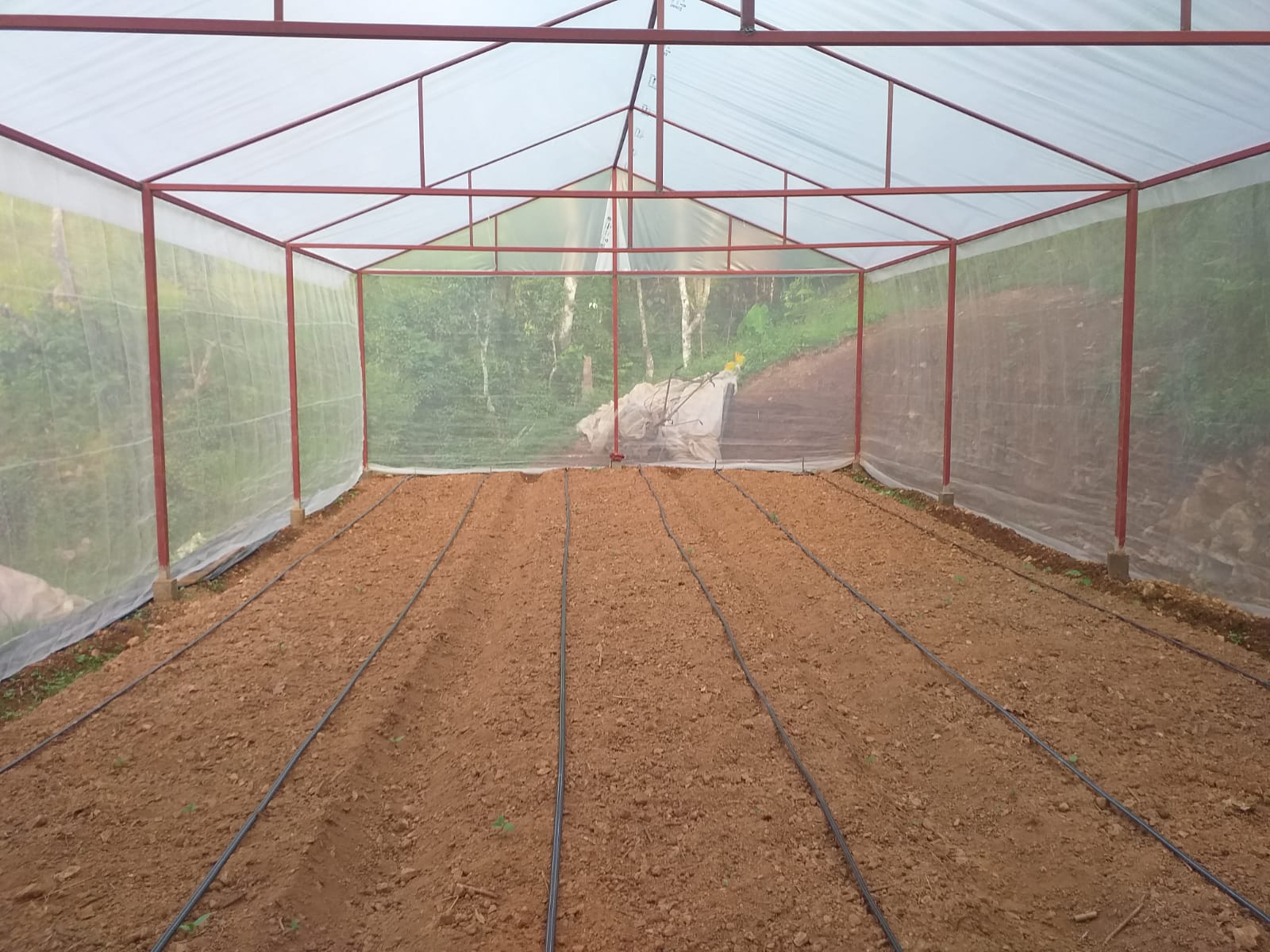
The final stage of water delivery is through the 16 mm drip lines installed throughout the banana cultivation area.
The 10-kattha system specifies approximately 3,566.667 m of drip line, while the 15-kattha system specifies 5,350 m.
The drip lines are connected to the main distribution system using the specified accessories, including start nipples, grommets, Tech-Up components, and end caps.
For banana cultivation, this type of arrangement provides a more organized method of delivering irrigation water directly within the crop area rather than depending on uncontrolled field flooding.
Comparing the Two Banana Irrigation Systems
|
Component
|
10 Kattha
|
15 Kattha
|
|
50 mm PVC Main/Sub-main
|
129.30 m
|
158.36 m
|
|
16 mm Drip Line
|
3,566.667 m
|
5,350 m
|
|
Screen/Disc Filter
|
1 no.
|
1 no.
|
|
Gravel Sand Filter
|
1 no.
|
1 no.
|
|
Hydrocyclone Filter
|
1 no.
|
1 no.
|
|
Venturi System
|
1 set
|
1 set
|
|
T-50 mm
|
8 nos.
|
8 nos.
|
|
L-50 mm
|
12 nos.
|
12 nos.
|
|
Gate Valve
|
4 nos.
|
4 nos.
|
The comparison shows that the basic filtration and control arrangement remains consistent, while the pipeline and drip-line quantities increase to accommodate the larger banana cultivation area.
More Than Just Installing Drip Lines
An effective drip irrigation system requires more than placing drip lines beside crops.
The system must begin with appropriate filtration, followed by correctly planned main and sub-main pipelines, suitable fittings, valves, connections, and finally the crop-level drip network.
This project demonstrates a complete approach to irrigation system planning, where every component—from the filtration unit to the end of the drip line—is considered as part of one connected system.
Supporting Efficient Banana Cultivation
The use of drip irrigation in banana cultivation can provide farmers with a more organized method of supplying water to the crop.
Instead of distributing water broadly across the entire field, drip irrigation delivers water through a controlled network positioned within the cultivation area.
For banana production, where regular irrigation is important, a properly designed drip system can become an important part of overall farm infrastructure.
G Seven Agriculture: Developing Practical Irrigation Solutions
At G Seven Agriculture Pvt. Ltd., irrigation projects involve more than supplying individual components. The focus is on developing complete systems that combine filtration, distribution, crop-level irrigation, and appropriate control components.
The banana drip irrigation system demonstrates how an irrigation network can be planned according to the actual size of the cultivated area.
From the filtration unit to the 16 mm drip lines, each component forms part of an integrated system designed to support organized irrigation for banana cultivation.
Conclusion
The drip irrigation system developed for 10-kattha and 15-kattha banana cultivation areas demonstrates a structured approach to modern farm irrigation.
With multi-stage filtration, 50 mm PVC main and sub-main pipelines, 16 mm drip lines, valves, fittings, and a Venturi system, the installation provides a complete framework for distributing irrigation water throughout the banana farm.
The project highlights the importance of designing irrigation infrastructure according to crop requirements and cultivated area, rather than relying on a one-size-fits-all approach.
For banana farmers looking toward more systematic irrigation management, drip irrigation can form an important component of modern and efficient crop production.
G Seven Agriculture Pvt. Ltd. — Practical irrigation solutions for productive agriculture.

.png)

.jpeg)
.jpeg)
.jpeg)